BREng reveals key lessons on decarbonising schools
Webinar to support education estate managers to achieve net zero

With the clock ticking to decarbonise schools and colleges, low-carbon building services consultant BREng has identified key lessons from recent pioneering school projects, to help education estate managers plan their path to net zero.
Rob Smelt, director of BREng, will present the findings in a webinar, entitled 'Meeting Heat Demand in Schools', part of a series on Decarbonising Education Buildings organised by elemental, taking place on 10 October, 2023.
"Space heating in schools accounts for around 60% of their energy use. Reducing the temperature by just 1ºC can save 10% on heating bills," says Rob Smelt. “With energy costs rising and pressure on schools to decarbonise, there are some quick and easy measures education estate managers can take to reduce energy use in the short term, without impacting the comfort of pupils and staff."
Heat pumps not enough on their own
However, he added: "Longer term, meeting net zero targets will require a complete transformation in the way schools and colleges are heated. This will involve use of a mix of technologies – combining heat pumps, high efficiency heat transmitters, low-energy lighting and solar power – to deliver the carbon reductions required."
Getting the technology solution right to achieve this will require site-by-site audits, to take account of local factors, such as building orientation, fabric, insulation levels, existing technology and occupant usage.
"Unfortunately, from our experience in the education sector, there is no 'magic bullet' to deliver net zero. It almost always requires a hybrid approach that pools the carbon savings from several technologies."
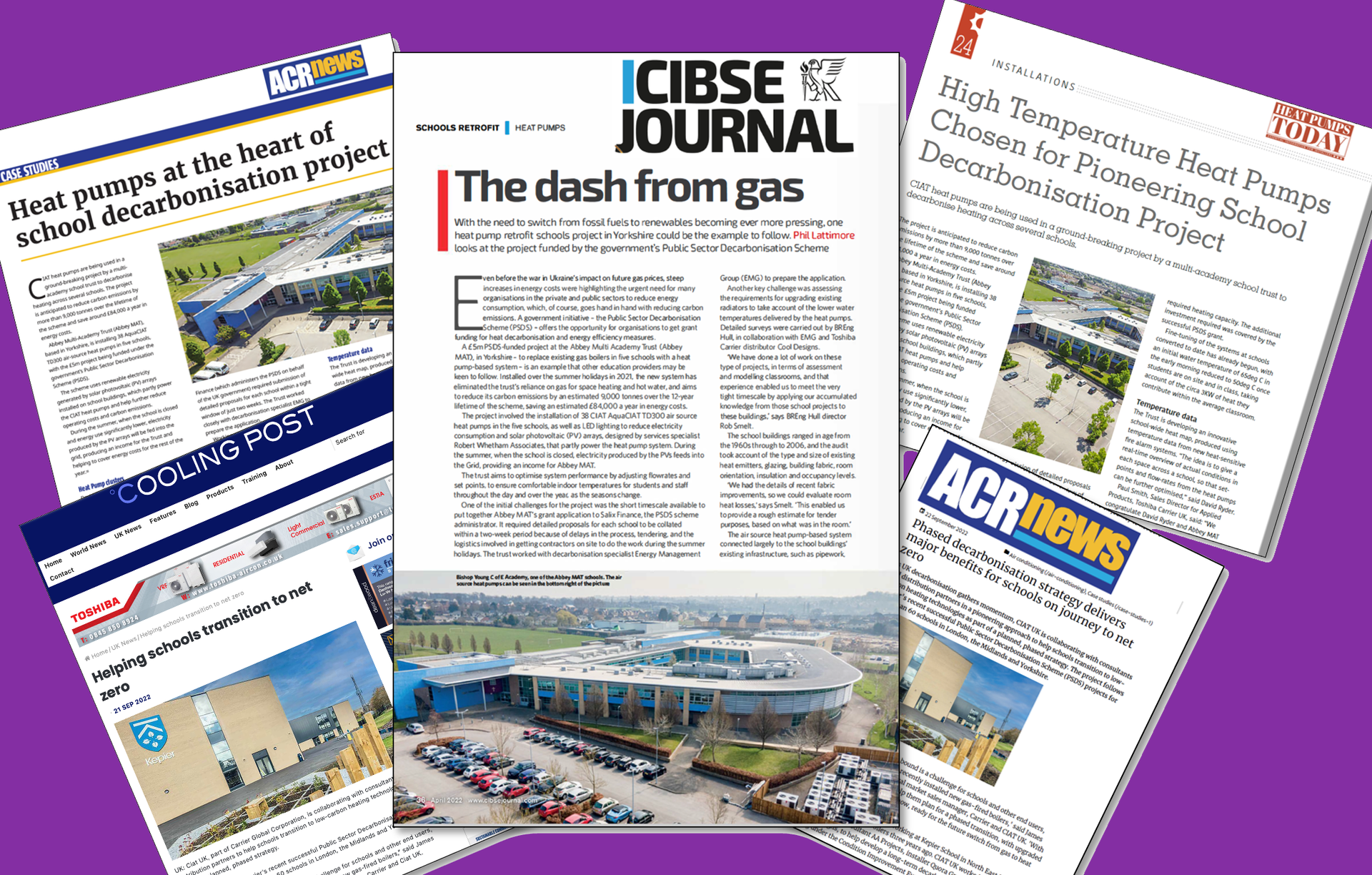
The key findings to be presented draw on BREng’s experience with ground-breaking decarbonisation projects in schools and Academies, funded by the UK government's Public Sector Decarbonisation Scheme (PSDS) and Condition Improvement Fund (CIF).
"Achieving net zero can be a challenge for schools and other end users, particularly for those who have recently installed new gas-fired boilers. With many schools, the solution is to help them plan for a phased transition, with upgraded heating infrastructure put in place now, ready for the future switch from gas to heat pumps," he said.
Other topics being covered include:
• The effects of temperature – and related metrics – on pupil learning and behavior
• How to make use of a heating audit
• The heating technologies best suited to education buildings
• How heating controls that can impact demand and improve efficiency
• How to minimise heat loss and reduce overall heating demand
For more details,
and to register for the webinar: https://www.elementaldigital.co.uk/events/meeting-the-heat-demand-in-schools/
Rob Smelt can be contacted on: Email: rob@brenghull.co.uk Tel: 07864 837071